 puzz
puzzFree printable word searches for kids
A word search is the gentlest puzzle on this site: there is nothing to get wrong, no arithmetic, and a child who finds only two words has still had a win. That makes it the right thing to hand a reluctant puzzler, a child who has just come out of school flat, or a car back seat on a long drive.
The grids here are built rather than filled at random, and the difference shows. Words are placed so that each one can be found in exactly one place and one direction. There is no accidental second reading of CAT hiding in the filler letters to argue about. Every remaining letter is then chosen so it cannot spell anything a parent would rather it did not. Easy grids run left-to-right and top-to-bottom only; harder grids add diagonals and backwards words.
The 7 free word search packs
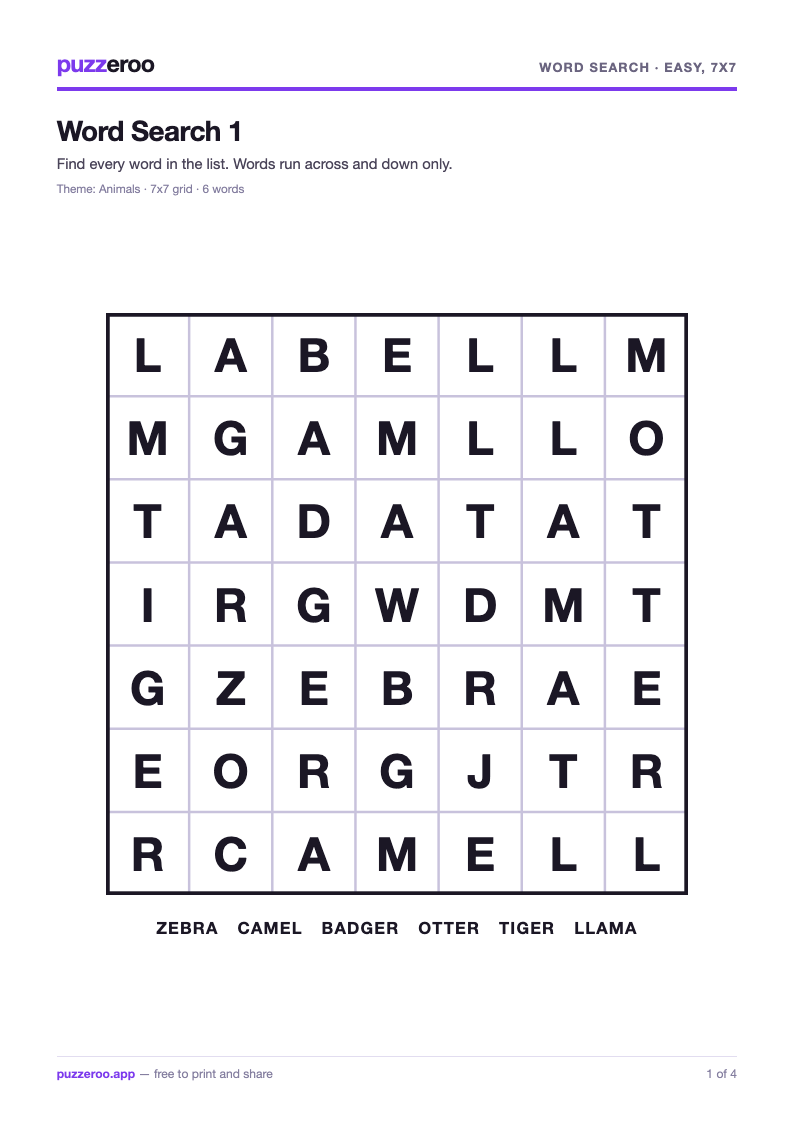
Easy, 7x7
Three free printable easy word searches for children aged 5-7, with answers.
Download the PDF →
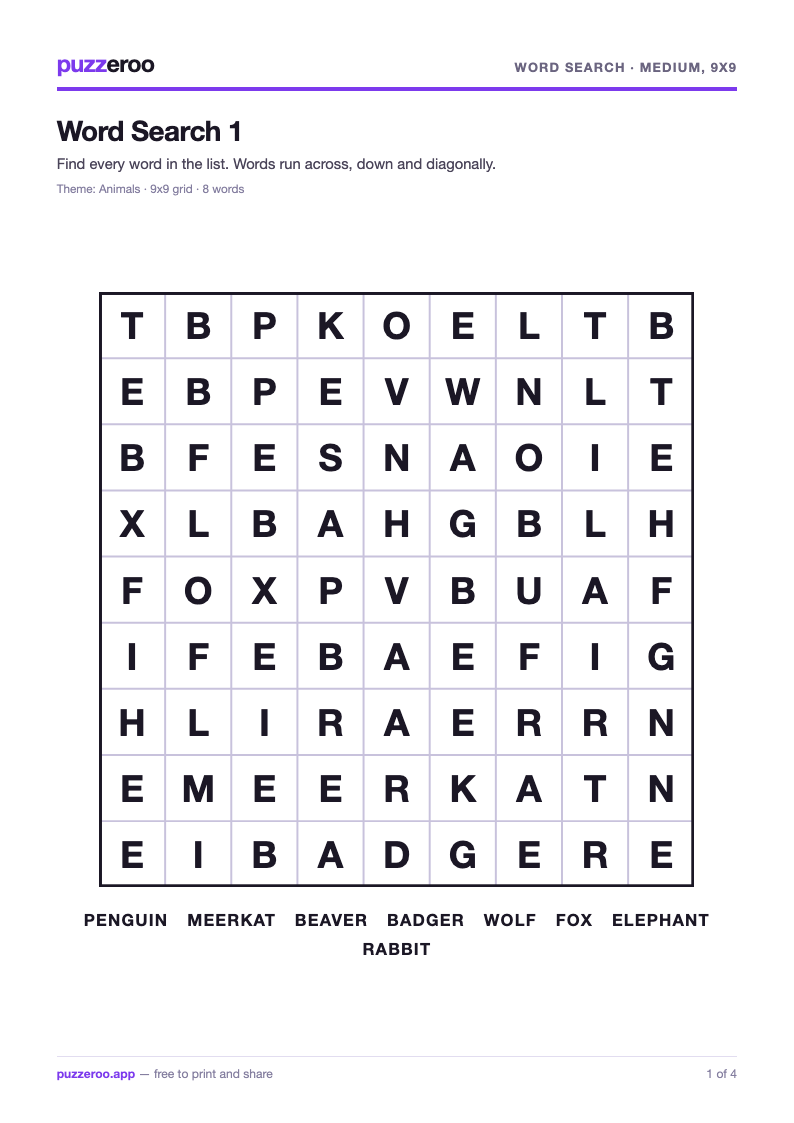
Medium, 9x9
Three free printable 9x9 word searches for ages 7-9, with answers.
Download the PDF →
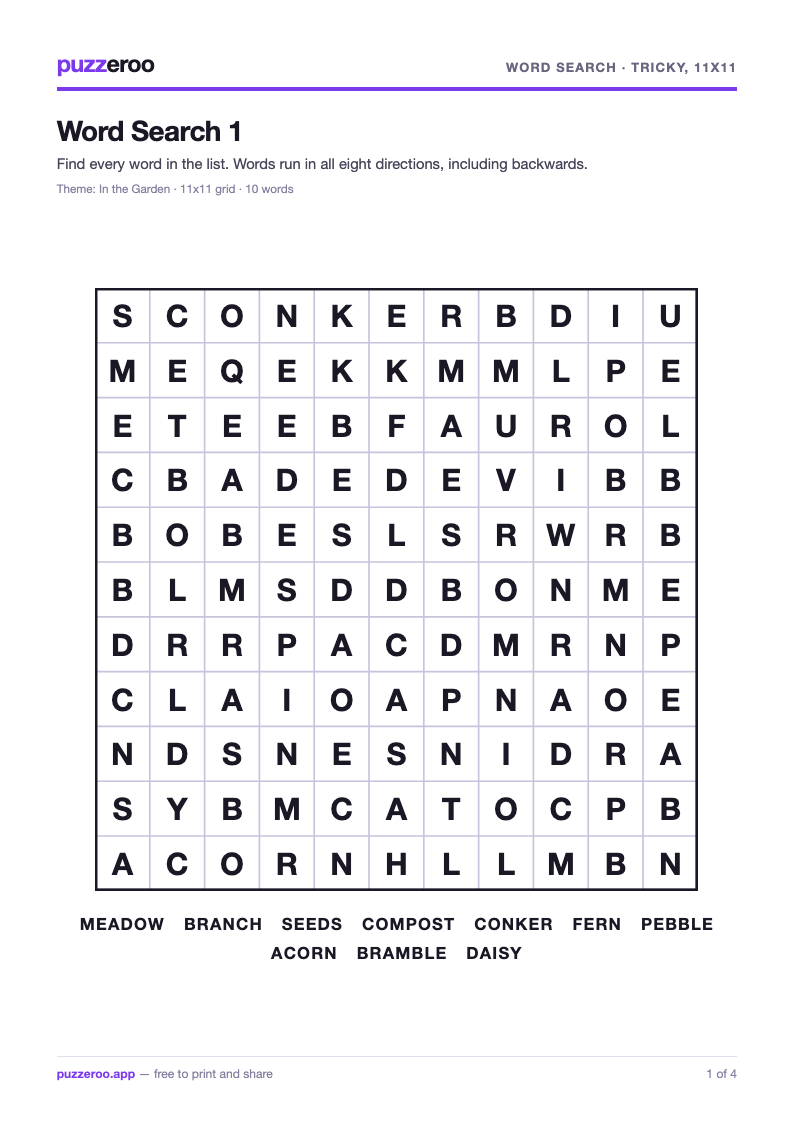
Tricky, 11x11
Three free printable hard 11x11 word searches for ages 9-12, with answers.
Download the PDF →
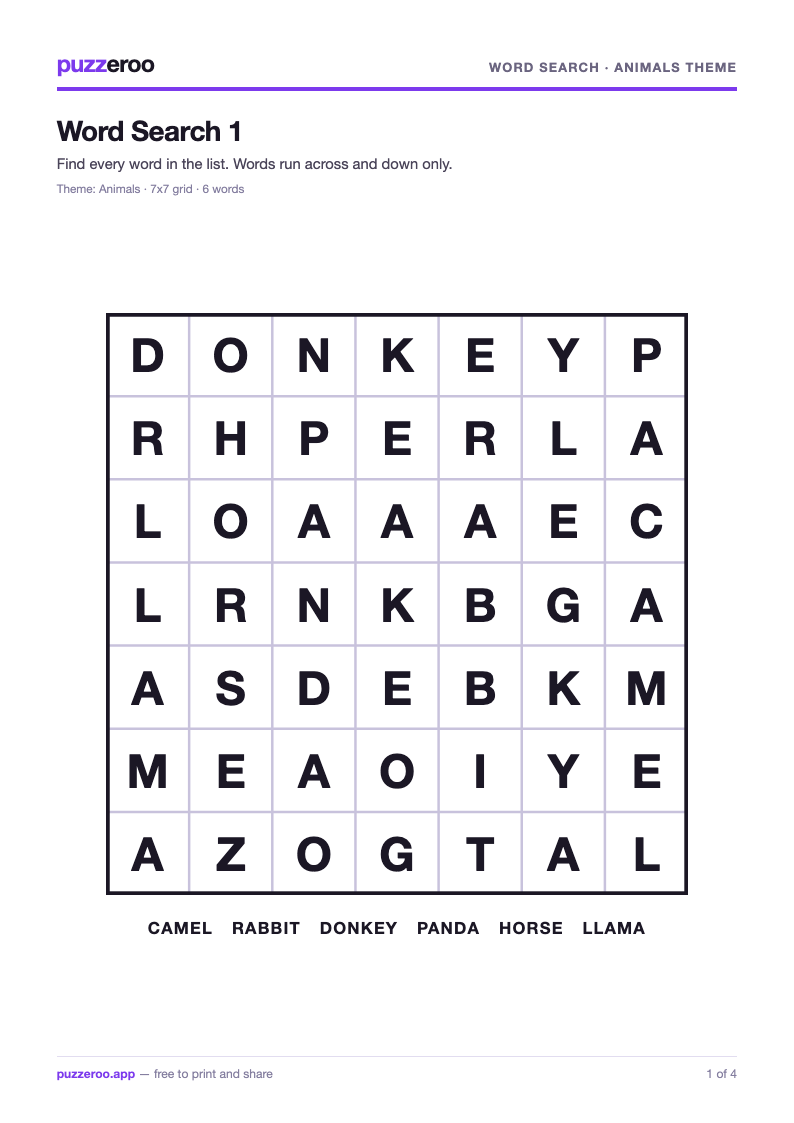
Animals theme
Three free printable animal word searches for children aged 5-8, with answers.
Download the PDF →
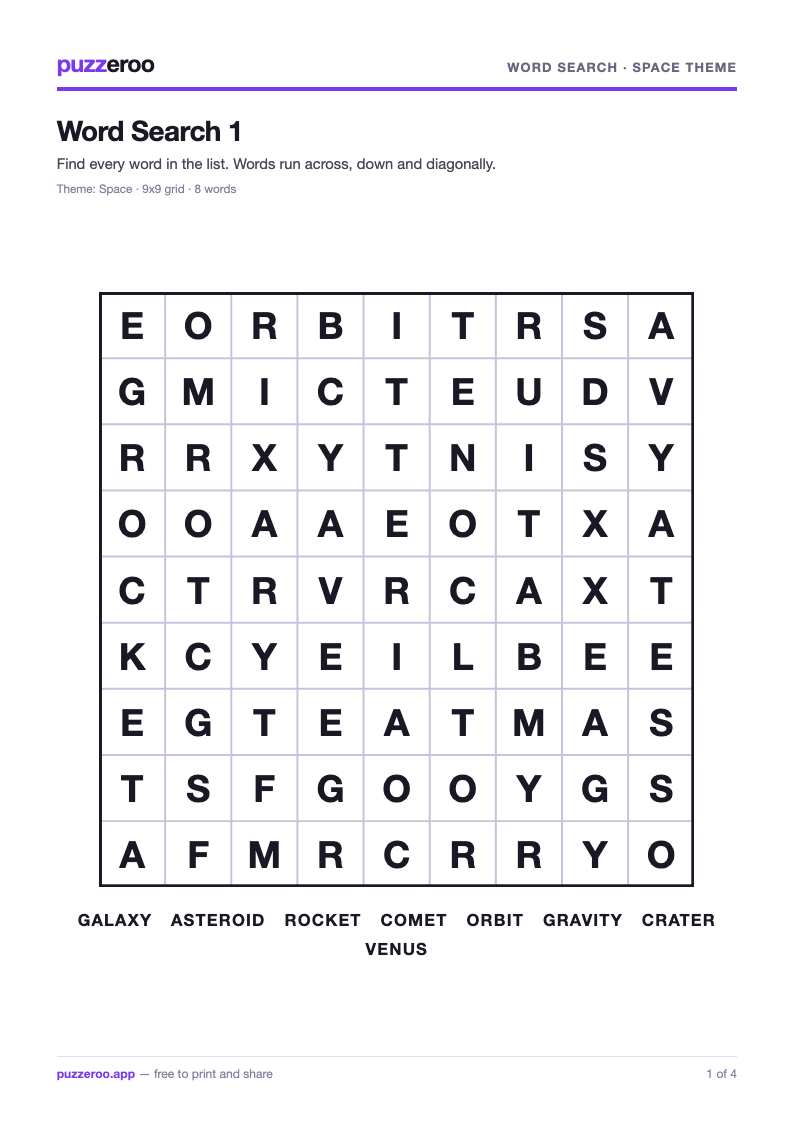
Space theme
Three free printable space word searches for ages 7-10, with answers.
Download the PDF →
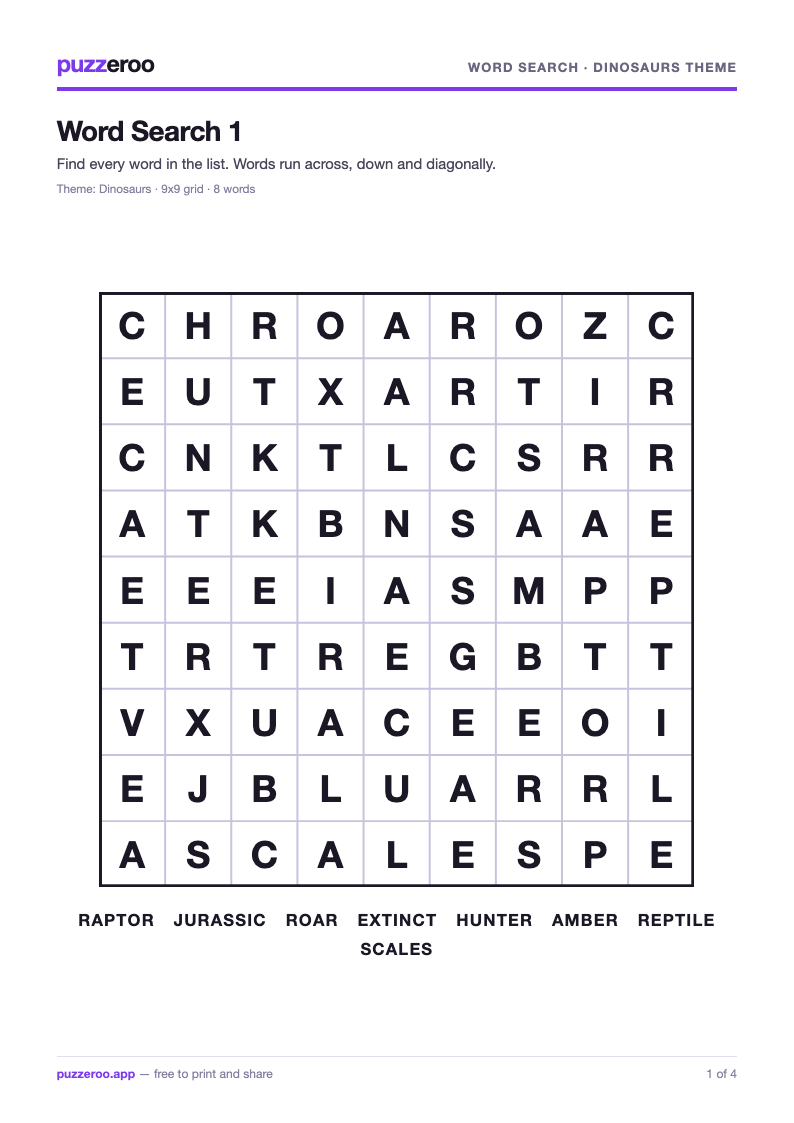
Dinosaurs theme
Three free printable dinosaur word searches for ages 7-10, with answers.
Download the PDF →
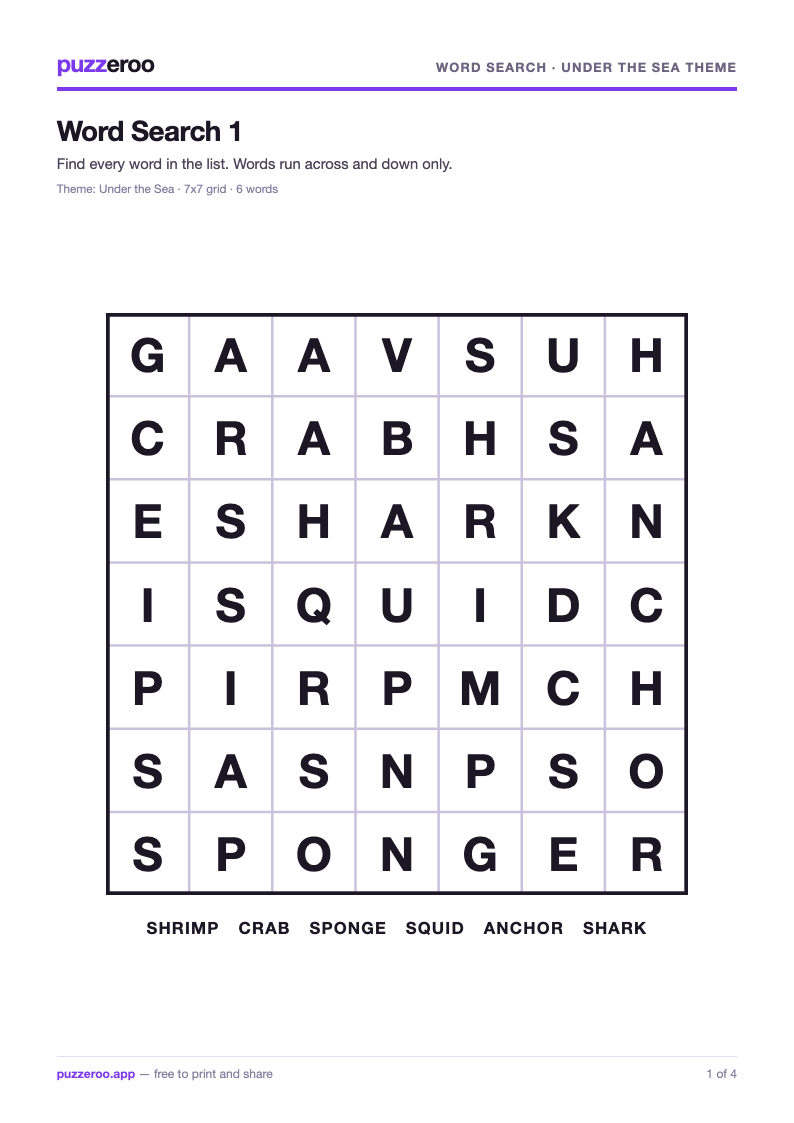
Under the Sea theme
Three free printable ocean word searches for children aged 5-8, with answers.
Download the PDF →
- Four A4 pagesThree puzzles, then a full answer key. Print the first three only if you would rather keep the answers.
- One verified solution eachEvery puzzle is passed through a solver and discarded unless exactly one answer fits.
- No sign-up, no watermarkA direct PDF download. No email address, no account, nothing to dismiss.
- Free to photocopyUse them at home, in a classroom, at a childminder or in a holiday club.
Which pack for which age?
| Word Search pack | Ages | What it asks of them |
|---|---|---|
| Easy, 7x7 | 5-7 | Five or six short words, across and down only. Nothing backwards, nothing diagonal. |
| Medium, 9x9 | 7-9 | Seven or eight words, and diagonals appear for the first time. |
| Tricky, 11x11 | 9-12 | Nine or ten longer words, running in all eight directions including backwards. |
| Themed packs | 5-9 | A single subject per pack. Good for topic work, a party or a rainy afternoon. |
How to solve a word search
There is a method beyond staring, and children who learn it get dramatically faster.
- Read the word list firstLook at the list before touching the grid. Pick one word to hunt for rather than trying to spot all of them at once. Searching for a single target is far faster than scanning for anything at all.
- Hunt the first letter, not the wordChoose the word you want, then sweep the grid for just its first letter. Every time you land on one, glance at the neighbouring letters to see whether the second letter follows. Most letters are ruled out in under a second.
- Start with the longest wordsLong words are much easier to spot and, once ringed, they cut the grid down for everything else. Working longest-first also means the hardest finds happen while the child is still fresh.
- Check every direction the grid allowsEasy grids hide words across and down only. Medium grids add both diagonals, and tricky grids also run words backwards, upwards and diagonally up. If a word will not appear, it is nearly always running in a direction the child has not thought to look in yet.
- Ring it and cross it offDraw a loop round each word in the grid and strike it off the list at the same time. Keeping the two in step stops the frustrating end-game of re-hunting a word that was already found.
Common questions
Are these word searches suitable for a five-year-old?
The easy 7x7 packs are, yes. They use five or six short words placed only left-to-right and top-to-bottom, so a child who can recognise letters but is not yet reading fluently can still work them by letter-matching alone.
Do the puzzles include an answer key?
Yes. The last page of every pack shows each grid again with every word ringed, so an adult can check a sheet in a couple of seconds.
Can a word appear more than once in the grid?
No. Each target word can be read in exactly one place and one direction. The grids are re-scanned in all eight directions after they are built and rebuilt if any word turns up twice, which removes the usual argument about whether a find "counts".
Could the random filler letters spell something unsuitable?
They are checked so that they do not. After the grid is filled, every line in all eight directions is scanned against a blocklist of words no child should stumble on, and the grid is regenerated if anything is found.
What does a word search actually teach?
Pattern recognition, visual scanning and spelling by shape. It will not teach reasoning the way sudoku does, but it is useful for letter recognition in younger children and for sustained attention in all of them.
Other free printable puzzles
The same puzzles, on an iPad
Puzzeroo has two hundred word search levels and six hundred more across the other three puzzle types. It works fully offline, shows no adverts, asks for no account, and costs one payment rather than a subscription. The worksheets above are generated from a separate puzzle range, so they never duplicate a level in the app.